

On Karma: The path we make by walking

Growing up in India, poverty, hunger, disease, death, inequity and suffering were visible everywhere. They were in the air you breathe, unconcealed by wealth or privilege. And they lived alongside beauty, love, kindness and celebration. The both-and of human existence.
This is a culture in which the belief in karma often yields a shrugging fatalism in response to life’s vagaries, or a prayerful surrender to the seemingly immutable dictates of fate. Both stances are manipulated by powerful elites in their pursuit of more – wealth, power, privilege, dominance – the usual horsemen.
Karma is a description of a natural law – the law of cause and effect, which states simply that actions have consequences. Intentional actions, which wield more power than unintentional ones, yield greater consequences.
Karma is not justice or retribution; it isn’t a moral force but an organic process of cumulative effects that flow from consistent, consequential actions. We live within organic patterns of continual unfolding, which have their own internal logic and order, and karma is a description of one aspect of that logic, of that order.
In other words, karma is not only personal — it doesn’t pertain just to a particular, individual life. Each of us is an ecology rather than a singular self. And we live within nested ecologies of interdependent being. We are shaped by these ecologies, and we contribute to them through our actions, choices, intentions, thoughts, beliefs, attitudes and behaviours.
In this sense, we participate in many different kinds of karma. Individual karma is not neatly siloed, nor is it consequentially separate from the karma of a family, society, culture, gender or humanity itself.
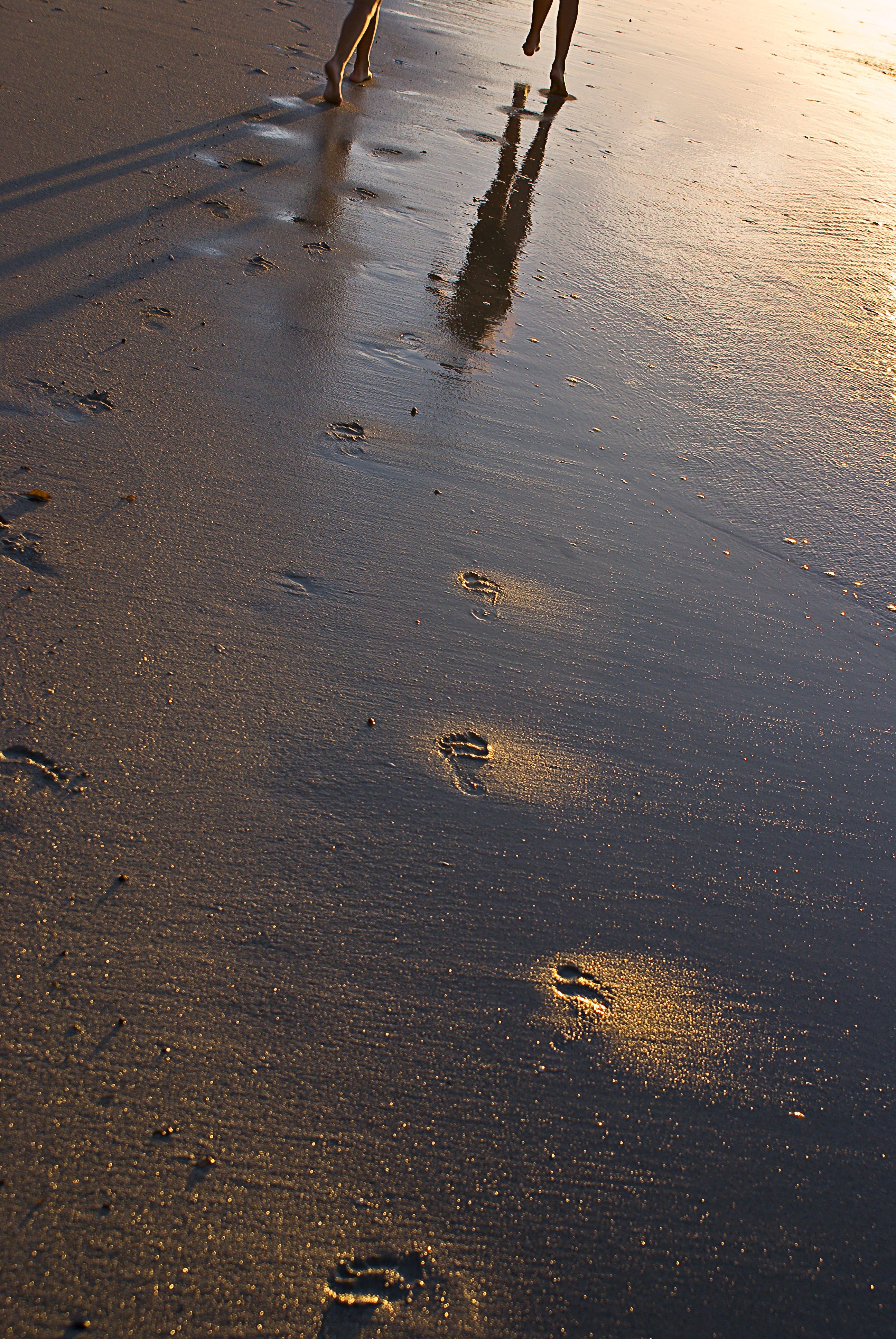
Karma, in this collective sense, is a path created by millions of beings walking across the same trackless wilderness along the same trajectory for a long, long time.
Cultural thought-forms, beliefs, and archetypes all make grooves in human consciousness. And we participate in those grooves, because we are part of collective consciousness. We are born into it, we swim in it like fish in the sea, and too often, we remain oblivious to its effects on us. It takes conscious effort to see people, systems, events and things as they are, rather than through the scrim of our individual and collective history.
So, for example, the karma that led to the massacre of Jews celebrating the first night of Hanukkah at Bondi Beach last December emerged from a complex weave of tangled patterns. Beliefs about tribal loyalty and retribution, tribal justice. Beliefs that the good of one group requires the destruction of another. Beliefs that violence is an expression of righteous rage, an eye for an eye, vengeance above humanity. Beliefs that there is one right answer, one right God, one right anything at all —that everything outside of that charmed circle is the Other that must be obliterated to ensure the purity and survival of the One.
All of these thought-forms create karmic eddies, karmic patterns. We contribute to these through our individual consciousness, as well as through the ways in which we live our lives, the choices we make, the people we elect to govern us, the values and policies we support, and a million other variables that make up the ecology of the world in which we live.
Wholeness has a way of asserting itself, regardless of the embers that fly from the fires of fragmentation.
Those who were murdered at Bondi Beach did not bring their deaths upon themselves because it was their karma to do so. That’s a child’s version of tit for tat. The men, women and children who died in Hiroshima in 1945, or the millions who are killed in wars, or who die of poverty, hunger, disease and malnutrition every day haven’t brought their deaths upon themselves either.
The essential question I’m sitting with is this: How am I, how are we, to live today, knowing that we shape the world even as it shapes us? Knowing, too, that we are fractals of the Sacred, that we are wholeness too — that we participate in, and are co-creators with the Great Mystery.
What can you and I do now, today, to carve a different path for ourselves, our communities, and our world? How do we discern and transform the karmic patterns that shape us, and bring to life new ones that contribute to wholeness? How can we as a community make pathways of love and equality, connection, compassion and understanding, mercy, safety, shelter and kindness for everyone?
These are pathways we make by walking. Each choice we make, each action we take, each quality of soul we embody, becomes our evolving selves, becomes our world. We see collective karma in action today in Minneapolis, as a community comes together to protect those who are most vulnerable and to unite against a deadly tyrant.
The questions I’m sitting with cannot be answered intellectually – or not by intellect alone. Rather, they call us to refine our inner world, to seat ourselves in inner stability, so we can take these essential questions into our bodies, into our hearts, into the choices we face day to day. They invite us to live with perplexity, to make peace with the fact that we are stumbling, fumbling beings, shaped by forces we strive to understand so we can make liberatory choices to transform our own and our collective karma into sources of peace and blessing.
We are not alone in this endeavour – we are the Sacred incarnate, and we are held by the Sacred in all life. In our own communities, with our families, in our workplaces, in our civic life, we are the active agents of collective karma and the tracks along which it evolves or devolves.
So, again, the question: What does this mean for those of us who seek to be sources of liberation and agents of divine order in the midst of an increasingly fractious, violent, chaotic world?
For me, at this stage of my life, the call is to slow way down to the pace of presence. To choose simplicity, so I can attend to the currents in which I participate, the ones that move in and through me, and in and through our world, the ones that become our shared reality. It means consciously tending to habits, routines, that scaffold my soul’s purposes, that harmonize my everyday choices with my vision for the world I want to contribute to creating for the next seven or fourteen or twenty-one generations of beings who share this earth.
It means cherishing and tending to my relationships with beloveds who are working, collectively, towards a world of wholeness, peace, and love. As a daily practice, it means discerning and meeting my own fragmentation with kindness and curiosity, crafting playful, creative ways to restore it to its rightful place in the heart of wholeness.
For you, at this stage of your life, the call may be to engage in direct social or political activism, or make art in the face of tyranny, or tend to your elders and neighbours, or something else entirely. There is no one right response to the needs of a bleeding world. Each one of us is essential to the well-being of the whole. At every stage of life, our responsibility is this: to gauge, honestly, the measure of our resources, to understand and honour the limits of our capacity, and to strategically, and devotedly, apply our gifts to the task at hand.
Choices. Actions. Consequences.
Karma: Friend of truth, companion of the real, the path we make by walking.
Gratitude for your wisdom.
Your words are like salve to my soul, very much needed during these troubled times. Thank you.